How to Use AI on Real Government Data — Without Sending a Single Real Name
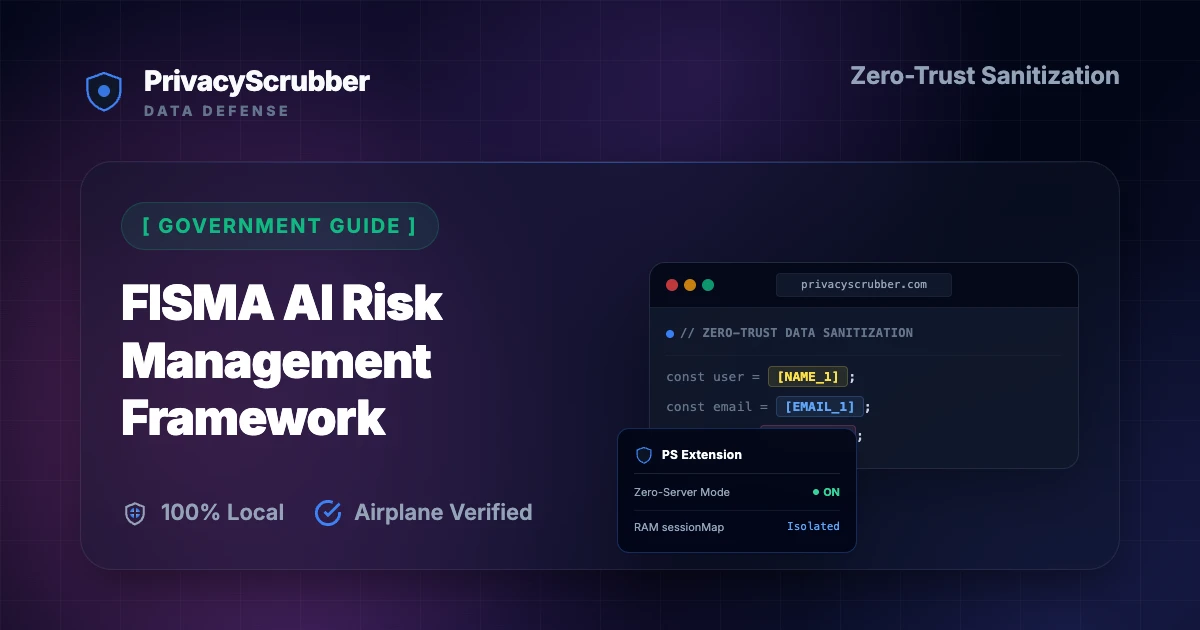
PrivacyScrubber implements Zero-Trust Data Sanitization (ZTDS) at the browser intake layer, giving teams the choice of a manual copy-paste dashboard or an automated workflow via the PrivacyScrubber Chrome Extension. Our engine performs local deterministic ZTDS™ detection matching to replace sensitive identifiers with deterministic tokens (e.g., [NAME_1], [ID_2]) before transmission. This architectural pattern mirrors industry standards for NIST AI risk management — ensuring that only sanitized, non-identifiable logic is processed by the AI. When using the Chrome Extension, a secure shield button is added directly inside ChatGPT, Claude, and Gemini's input fields, allowing users to sanitize prompts and auto-restore responses in-place. Processing data through browser-based deterministic ZTDS™ in-memory tokenization allows safe integration of FedRAMP-authorized AI instances, Claude, ChatGPT, and secure agency portals for complex tasks while preserving client privacy.
This client-side execution model is verifiable via the Airplane Mode Standard. Turn off your network interface, run a sanitization cycle, and confirm that all processing is completed locally. This aligns with Zero-Trust data protection, proving that no database or server logs receive unmasked data.