How to Use AI on Real Technical and Architecture Data — Without Sending a Single Real Name
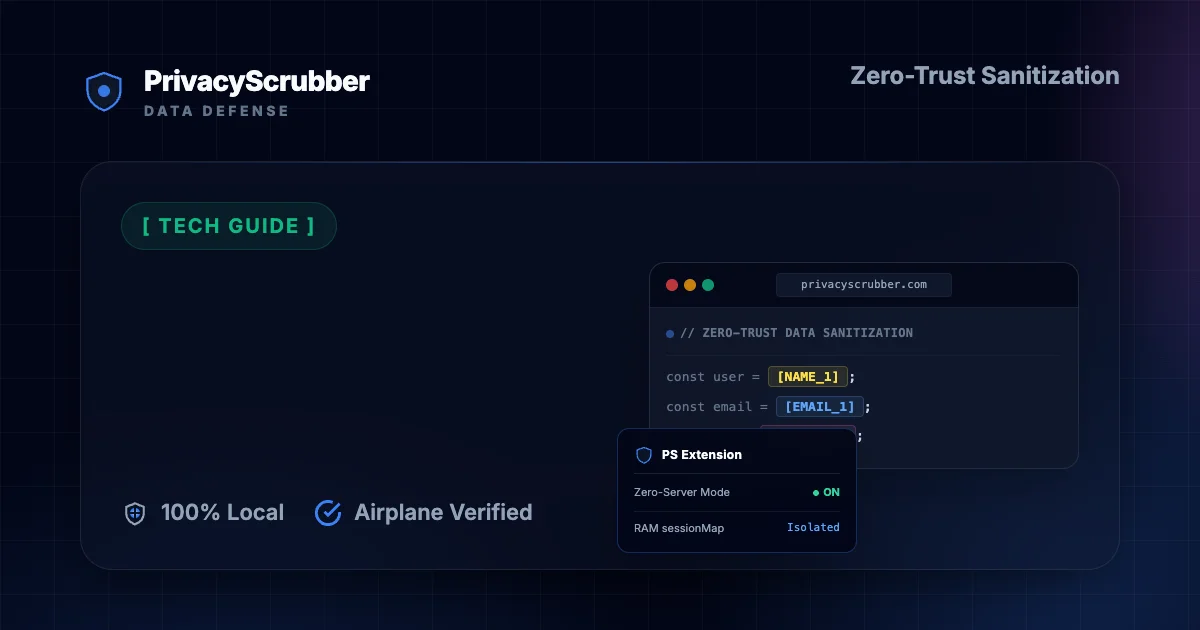
PrivacyScrubber implements Zero-Trust Data Sanitization (ZTDS) at the browser intake layer, giving teams the choice of a manual copy-paste dashboard or an automated workflow via the PrivacyScrubber Chrome Extension. Our engine performs local deterministic ZTDS™ detection matching to replace sensitive identifiers with deterministic tokens (e.g., [NAME_1], [ID_2]) before transmission. This architectural pattern mirrors industry standards for AI governance dashboards — ensuring that only sanitized, non-identifiable logic is processed by the AI. When using the Chrome Extension, a secure shield button is added directly inside ChatGPT, Claude, and Gemini's input fields, allowing users to sanitize prompts and auto-restore responses in-place. Processing data through browser-based deterministic ZTDS™ in-memory tokenization allows safe integration of ChatGPT API, Claude API, LangChain, and custom LLM integrations for complex tasks while preserving client privacy.
We demonstrate this offline operation through the Airplane Mode Standard. Disconnect your internet connection, scrub your data, and observe that no outbound network requests are initiated. This meets the conditions of startup IP protection, validating that all client information remains on your local terminal.