How to Use AI on Real Education Data — Without Sending a Single Real Name
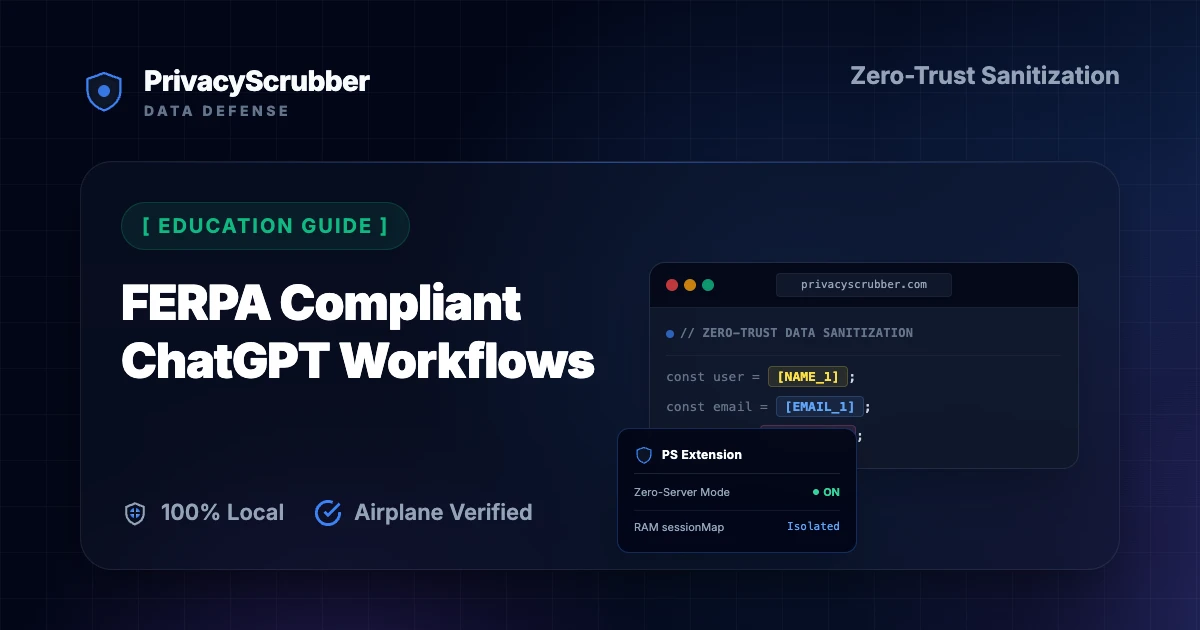
With local Zero-Trust Data Sanitization, PrivacyScrubber intercepts data in the browser through our Secure Workspace or the PrivacyScrubber Chrome Extension. The deterministic ZTDS™ in-memory tokenization system replaces personal data markers with standardized tokens (such as [NAME_1]) in local memory. This design conforms with the standards in academic record security, ensuring that cloud platforms only analyze sanitized text. The Chrome Extension automates this workflow by adding a quick protect toggle inside ChatGPT, Claude, and Gemini for instant inline sanitization and detokenization. By executing deterministic ZTDS™ detection parsing entirely in local memory, PrivacyScrubber preserves the usefulness of ChatGPT, Google Classroom AI integrations, Claude, and educational grading assistants for production workflows without introducing external risk.
We support this architecture with the Airplane Mode Standard. Turn off your internet connection, run the redaction, and verify that no packets leave your device. This satisfies the safety rules in global privacy compliance for corporate data protection.