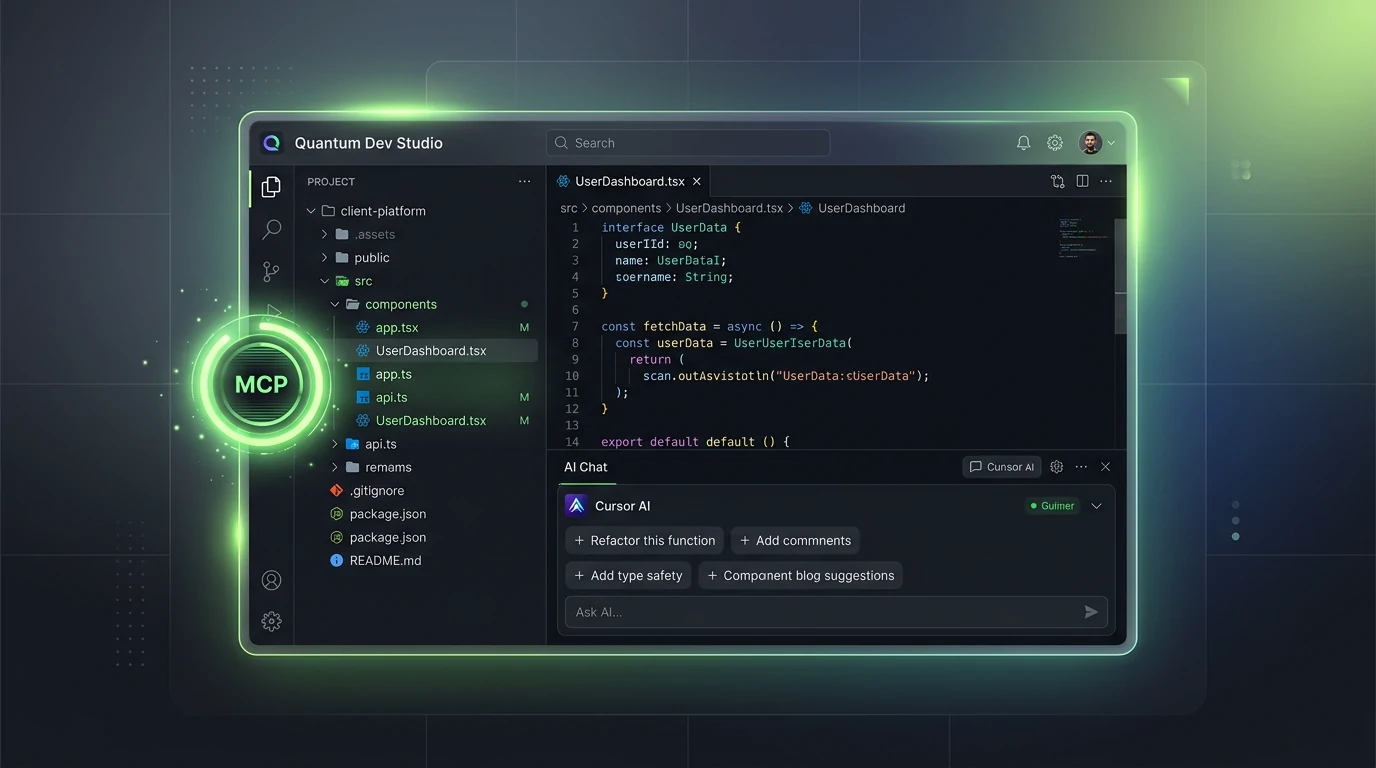
MCP Server: IDE Prompt Security Gateway for Cursor & Claude Desktop
Zero-Trust Agentic Pipelines: Secure Your IDE Localhost
AI Summary / Key Takeaways
"Air-gapped Model Context Protocol (MCP) server for Cursor, Windsurf, and Claude Code. Scrub code secrets and PII locally before LLM transmission."
Enterprise-Grade AI Privacy
Add custom redaction rules and priority support with PRO.
Interactive PII Detection & Sanitization Sandbox
Test real-time client-side RAM tokenization. Choose a specialized preset or paste your own raw prompt to test instant reversible redaction.
Sanitized locally in volatile RAM. Pre-prompt compliance maintained under IDE Prompt Security (MCP) standards (GDPR, HIPAA, SOC 2).
The Challenge with AI Data Workflows
Developers using AI-powered IDEs like Cursor often run "codebase-wide analysis" that inadvertently uploads hardcoded API keys, customer emails in test databases, and production log dumps to external LLMs.
How It Works
Install the MCP Server
Run 'npx @privacyscrubber/mcp-server' or add it to your .cursor/mcp.json config. The server starts locally on stdio — no network port, no HTTP, no authentication required.
Call sanitize_file or sanitize_text
Use 'audit_directory_for_pii' to scan an entire codebase for leaked secrets before ingestion. Then call the 'sanitize_file' tool with a file path, or 'sanitize_text' with raw content. The MCP server applies the active detection profile and returns a tokenized version with a session token map.
Reveal with reveal_text
After the AI model processes your tokenized prompt, paste the response into 'reveal_text'. Tokens ([NAME_1], [EMAIL_2]) are restored to original values from the in-memory session map. Zero persistence, zero server.
Supported Formats & Limitations
Supported Formats
System Limitations
- Requires Node.js runtime for the local MCP server
- Operates via stdio transport (no network ports exposed)
- Designed for developer environments and automated CI/CD staging
Unblock Autonomous AI Coding: Zero Secret & PII Leaks in Cursor & Claude Desktop
Autonomous AI coding assistants—including Cursor Composer, Windsurf, and Claude Code—transform developer productivity by reading full repository trees, logs, and configuration files into LLM context windows. But this velocity introduces an immediate security risk: a simple prompt like "Fix database connection timeout" can cause an autonomous agent to read .env.production, database connection strings, and test databases containing real customer PII, transmitting them in plaintext to third-party model providers.
The PrivacyScrubber MCP Server gives engineering teams the ultimate outcome: unconstrained AI coding velocity with zero secret exfiltration risk. Operating directly on your machine over standard input/output (stdio), it intercepts file reads and prompt payloads locally, replacing secrets and personal data with reversible tokens ([API_KEY_1], [DB_URI_1], [NAME_1]) before data leaves your workstation.
Air-Gapped stdio Gateway: Real-Time Protection with 0ms Network Latency
Unlike cloud DLP proxies that add 200ms+ network delays and require root CA certificate installations, PrivacyScrubber runs as a lightweight local child process:
+-----------------------------------------------------------------------------------+
| LOCAL WORKSTATION / IDE (Cursor, Claude Desktop, Windsurf, VS Code)               |
|                                                                                   |
|  1. Developer Prompt / Autonomous Agent File Read                                 |
|     "Analyze logs/orders.json and fix the failing payment transaction"            |
|           |                                                                       |
|           v (stdio JSON-RPC IPC - 0ms Network Latency)                            |
|  +-----------------------------------------------------------------------------+  |
|  | PRIVACYSCRUBBER MCP SERVER (Local Node.js Process)                          |  |
|  | - Intercepts sanitize_file / sanitize_text tool calls                       |  |
|  | - 30 Specialized Profiles (DevOps Secrets, AWS, DB URIs, GDPR, HIPAA)     |  |
|  | - Replaces sensitive values with [AWS_KEY_1], [DB_URI_1], [CUSTOMER_1]     |  |
|  | - Volatile In-Memory Session Map (Zero Disk Writes, Zero Remote Telemetry)  |  |
|  +-----------------------------------------------------------------------------+  |
|           |                                                                       |
|           v (Tokenized Prompt)                                                    |
|  2. Tokenized Payload Egress -> External AI API (Anthropic / OpenAI / DeepSeek)   |
+-----------------------------------------------------------------------------------+
                                    | (External Network)
                                    v
       External LLM analyzes code structure without learning actual secrets
                                    |
+-----------------------------------------------------------------------------------+
|  3. Model Response -> IDE Agent executes reveal_text                              |
|     Tokens rehydrated in local memory -> Developer sees working solution!         |
+-----------------------------------------------------------------------------------+
60-Second Setup: 1-Click Blueprints for Cursor & Claude Desktop
Deploy PrivacyScrubber into your AI IDE in under 60 seconds with zero network ports or firewall configurations:
{
  "mcpServers": {
    "privacyscrubber": {
      "command": "npx",
      "args": ["-y", "@privacyscrubber/mcp-server"],
      "env": {
        "PS_PROFILE": "devops",
        "PS_TIER": "pro"
      }
    }
  }
}{
"mcpServers": {
"privacyscrubber": {
"command": "npx",
"args": ["-y", "@privacyscrubber/mcp-server"],
"env": {
"PS_PROFILE": "general",
"PRIVACYSCRUBBER_TELEMETRY": "false"
}
}
}
}Developer Secrets & PII Coverage: Zero-Trust Detection for Source Code
Calibrated specifically for source code, database dumps, and infrastructure manifests:
Cloud Credentials
AWS Access Keys (AKIA...), GCP Service Account JSON keys, and Azure Client Secrets.
Database URIs
Connection strings for PostgreSQL, MongoDB (mongodb+srv://), MySQL, and Redis with passwords.
Private Keys
RSA, OpenSSH, and Ed25519 blocks (-----BEGIN PRIVATE KEY-----), and TLS/SSL certificates.
API & JWT Tokens
Stripe Live keys (sk_live_), GitHub PATs (ghp_), Bearer tokens, and OpenAI secret tokens.
Exposed MCP Tool Reference: Native Integration with Agent Context
Your AI coding assistant automatically discovers four native tools via the standard Model Context Protocol schema:
| Tool Identifier | Input Parameters | Operational Output | Typical Use Case |
|---|---|---|---|
| sanitize_text | text: string, profile?: string | Tokenized string + entity count telemetry | Sanitizing ad-hoc code snippets or chat prompt text |
| sanitize_file | filePath: string, profile?: string | Sanitized file string (.txt, .json, .log, .csv, .env) | Feeding entire files into context without manual copy-paste |
| reveal_text | tokenizedText: string | Restored plaintext string using RAM session map | Rehydrating AI responses back to working code with real keys |
| audit_directory_for_pii | dirPath: string, profile?: string | Comprehensive JSON audit report with line numbers | Pre-flight codebase scan before autonomous agent execution |
Security & Speed Comparison: Local MCP Gateway vs. Disruptive Cloud Proxies
How local stdio interception provides absolute security and uncompromised developer speed:
| Security & Dev Factor | Cloud DLP Network Proxy | Static Git Hooks (TruffleHog) | PrivacyScrubber MCP Server |
|---|---|---|---|
| Processing Architecture | Remote cloud hop (180–350ms) | Pre-commit shell script | Local stdio IPC (<1ms latency) |
| AI Agent Interception | Fails on WebSocket / HTTP/2 streams | None: Only triggers on git commit | Native MCP tool integration |
| Reversible Token Reveal | Destructive redaction (Breaks code) | N/A (Blocks commit) | 1-Click reveal_text in local memory |
| Customer PII Detection | Generic regex / High false positives | Secrets only (Zero PII detection) | 30 Specialized Profiles (GDPR, HIPAA, FinTech) |
| Third-Party Vendor Risk | New subprocessor requiring DPA/BAA | Self-hosted | Zero-Trust: Zero servers, 0-day clearance |
Enterprise Rule Governance: Enforce Zero-Leak Code Across 50+ Engineers at $99/mo Flat
In enterprise engineering teams, you cannot rely on individual developers configuring custom regex patterns manually. With the TEAMS Tier ($99/mo Flat), security architects push centralized detection schemas—such as proprietary account ID formats and internal microservice token standards—directly to every developer's MCP server through encrypted team sync.
For automated repository pre-audits prior to launching agentic workflows, explore the companion Automated Directory Auditing guide. If your team also works across web-based chat interfaces, pair your IDE gateway with our in-browser Chrome Extension.
Client-Side ZTDS™ Execution & Conformance Verification
All PII detection and deterministic tokenization execute 100% inside local client memory — eliminating cloud proxies, external subprocessors, and network data egress.
Frequently Asked Questions
Technical Details & Privacy Architecture
Which IDEs and AI agents are supported?
What tools does the MCP server expose?
Does the MCP server send any data to external APIs?
Does the MCP server support industry-specific detection profiles?
Is the PrivacyScrubber MCP Server free to use?
How do I verify the MCP server is processing locally?
Can I push custom rules to my engineering team's IDEs?
Protect Your IDE Prompts & Secrets in Under 60 Seconds
Zero open ports. Zero external network egress. Works natively with Cursor and Claude Desktop.