How to Use AI on Real Education Data — Without Sending a Single Real Name
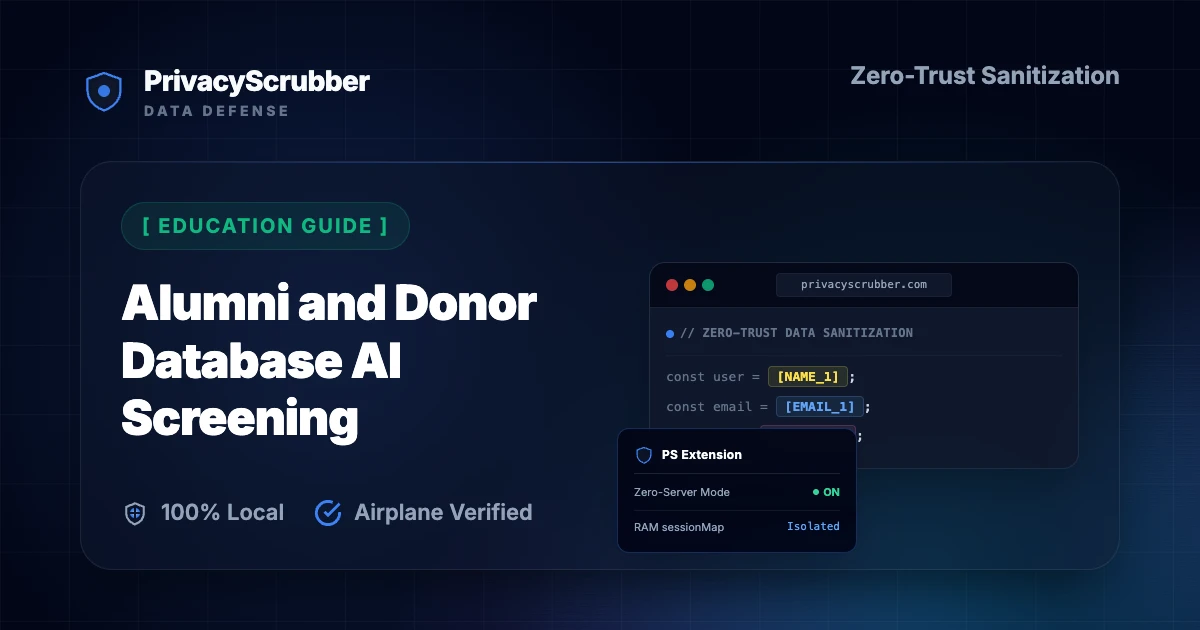
PrivacyScrubber provides Zero-Trust Data Sanitization (ZTDS) in the browser using either our web workspace or the PrivacyScrubber Chrome Extension. The local engine uses deterministic ZTDS™ detection rules to swap sensitive corporate entities for deterministic tokens (e.g., [NAME_1]) before transmission. This matches the compliance model of academic record security, keeping raw business data offline. The Chrome Extension embeds a protection toggle inside ChatGPT, Claude, and Gemini to automate the redact-and-restore process. Running deterministic ZTDS™ entity rules locally ensures that teams can continue using ChatGPT, Google Classroom AI integrations, Claude, and educational grading assistants for daily queries without any third-party data collection.
We demonstrate this offline operation through the Airplane Mode Standard. Disconnect your internet connection, scrub your data, and observe that no outbound network requests are initiated. This meets the conditions of global privacy compliance, validating that all client information remains on your local terminal.