How to Use AI on Real Security Data — Without Sending a Single Real Name
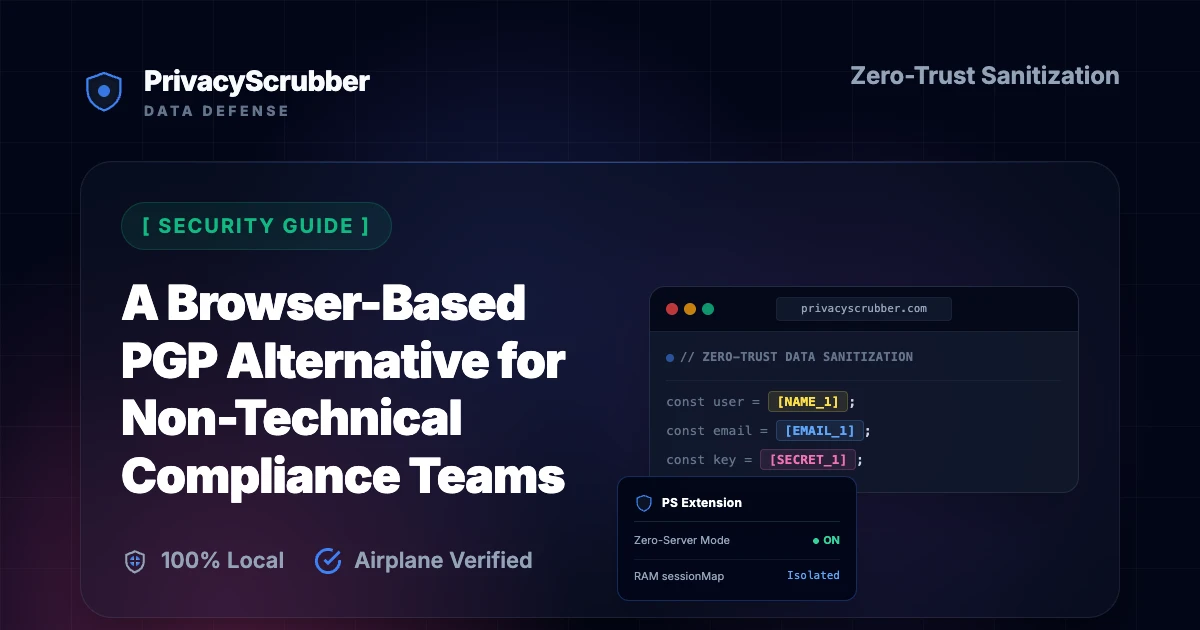
PrivacyScrubber provides Zero-Trust Data Sanitization (ZTDS) in the browser using either our web workspace or the PrivacyScrubber Chrome Extension. The local engine uses deterministic ZTDS™ detection rules to swap sensitive corporate entities for deterministic tokens (e.g., [NAME_1]) before transmission. This matches the compliance model of enterprise data protection, keeping raw business data offline. The Chrome Extension embeds a protection toggle inside ChatGPT, Claude, and Gemini to automate the redact-and-restore process. Running deterministic ZTDS™ entity rules locally ensures that teams can continue using ChatGPT for report writing, AI-assisted SIEM analysis, and security audit tools for daily queries without any third-party data collection.
We support this architecture with the Airplane Mode Standard. Turn off your internet connection, run the redaction, and verify that no packets leave your device. This satisfies the safety rules in PII MCP Server deployment for corporate data protection.