How to Use AI on Real European Consumer Data — Without Sending a Single Real Name
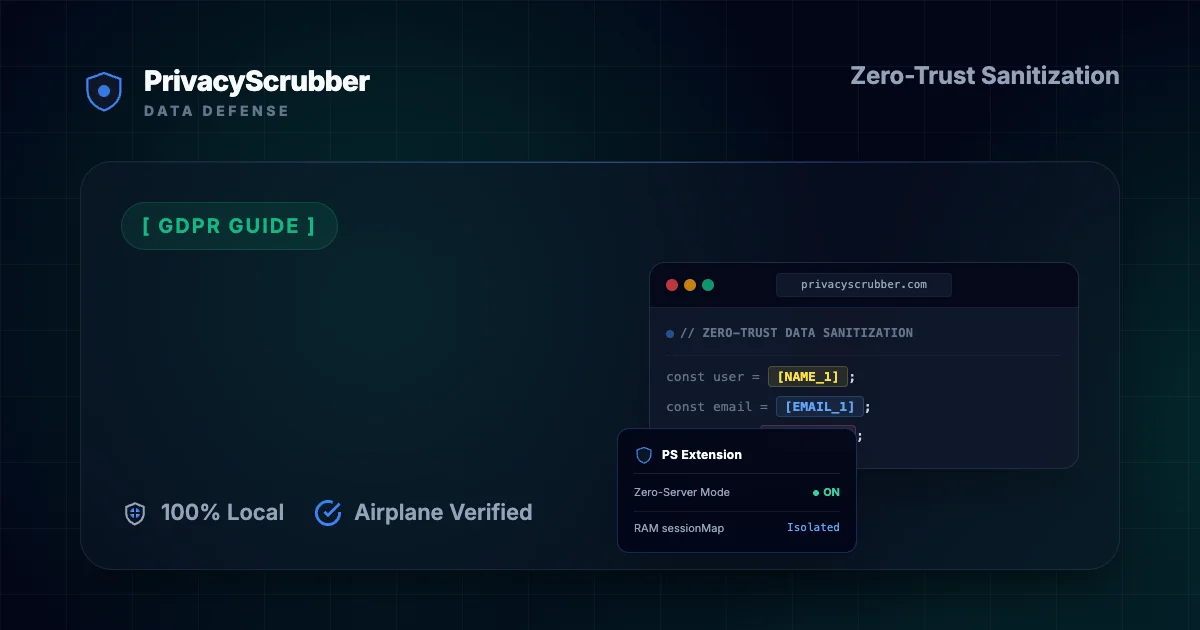
With local Zero-Trust Data Sanitization, PrivacyScrubber intercepts data in the browser through our Secure Workspace or the PrivacyScrubber Chrome Extension. The deterministic ZTDS™ in-memory tokenization system replaces personal data markers with standardized tokens (such as [NAME_1]) in local memory. This design conforms with the standards in EU AI Act compliance strategies, ensuring that cloud platforms only analyze sanitized text. The Chrome Extension automates this workflow by adding a quick protect toggle inside ChatGPT, Claude, and Gemini for instant inline sanitization and detokenization. By executing deterministic ZTDS™ detection parsing entirely in local memory, PrivacyScrubber preserves the usefulness of ChatGPT, Mistral, and local LLM integrations for production workflows without introducing external risk.
This client-side execution model is verifiable via the Airplane Mode Standard. Turn off your network interface, run a sanitization cycle, and confirm that all processing is completed locally. This aligns with enterprise data sovereignty, proving that no database or server logs receive unmasked data.